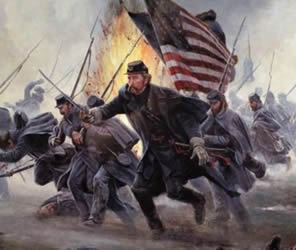
Soldiers, Executioners, and the Police
The Academia.edu Essay Review
Soldiers, Executioners, and the Police: Questions Concerning the Biblical Mandate to Not Kill
“Does The Bible really say that all killing is wrong?… Smith suggests that the word ‘kill’ might not have been the right translation for that famous biblical commandment. He argues that a more accurate term is ‘murder…’ This little translation nugget has hefty implications. It’s like discovering a missing all along, and everything looks different now. It changes the conversation around war, law enforcement, and even personal ethical debates. How many folks would breathe easier knowing that, according to this perspective, their actions in defense or law enforcement aren’t automatically condemned?… Smith also delves into how The New Testament reshapes this debate. Jesus, in the Sermon on the Mount, brings another layer by focusing not just on the act of killing, but the intention—the anger behind the action… And really, doesn't that lead us to consider our motivations in everything we do, wrapping these insights into a real-world impact?…”
To hear Price’s entire essay review of Soldiers, Executioners, and the Police, CLICK BELOW.
To read along with the audio, SCROLL DOWN to see the transcript.
To learn more about Richard Price’s work and mission, CLICK HERE.
The Academia.edu Essay Review Transcript
Hello, and welcome to In Depth With Academia, the podcast where we dive deep into the insights academia has to offer us all. I’m Richard Price, your host for today, and I’m super excited to unpack some intriguing ideas with you. You know, as the CEO of Academia.edu, I’ve come across my fair share of fascinating papers, but the one we’re going to tackle today is really something else. Today, we’re exploring the work of W. Kent Smith, who delves into the complex issue of what many call the biblical mandate to not kill.
Now, what makes this topic so compelling? It’s one of those age-old questions that seems straightforward: “You should not kill.” Yet, upon closer examination, we find a world of nuance and debate. So, you might be wondering: What, exactly, is at the heart of this paper?
Well, Smith questions how this biblical commandment has been interpreted over time, and its implications for soldiers, executioners, and police officers. He asks: Is it saying all killing is wrong? Or is it more about murder, specifically? And why does that distinction matter? These are big questions.
Now, why is that significant? Well, our society for centuries has grappled with this notion, especially in times of conflict or justice. It’s a knotty problem. Think about the moral and ethical implications for anyone whose duty might involve taking a human life.
It’s a debate that involves religion, ethics, law—you name it. Let’s dive into the core findings of Smith’s work here. He suggests that the word “kill” might not have been the right translation for that famous biblical commandment.
The paper argues that a more accurate term is “murder.” There’s an intriguing exploration of the Hebrew word ratsach, which can mean “murder.” Yet, for hundreds of years, interpretations in the Western world, especially from The King James Bible, said “kill.”
Curious, right? This little translation nugget has hefty implications. It’s like discovering a missing all along, and everything looks different now. It changes the conversation around war, law enforcement, and even personal ethical debates. How many folks would breathe easier knowing that, according to this perspective, their actions in defense or law enforcement aren’t automatically condemned?
As Smith suggests, not all translations captured that nuance until more recently. Isn’t it fascinating how the evolution of language and context can influence societal views? During the time when The King James Bible was “the reference,” switching the word “kill” to “murder” could have raised fewer eyebrows in legal and ethical discussions, especially those involving state-sanctioned actions, like war or law enforcement duties.
This makes me think, let’s digress a bit, how much of our understanding is colored by translations across societies? Languages change, evolve. Imagine two cultures interpreting festivities. One says “feast” and the other, “ritual.” It’s the same thing, but colored with different meanings, right? All right, back to the paper.
Smith also delves into how The New Testament reshapes this debate. Jesus, in the Sermon on the Mount, brings another layer by focusing not just on the act of killing, but the intention—the anger behind the action. I think this is fascinating because it shifts the focus entirely.
The paper suggests Jesus emphasizes the morality beyond mere actions, to the heart of our motivations. Isn’t that something to think about? And so, this evolution—from “don’t kill,” to “don’t murder,” and then to “watch your heart”—represents a profound journey of understanding, one that reflects both historical context and evolving human consciousness.
From Smith’s exploration, it’s not the act alone, but the anger—without just cause—that comes under scrutiny. And really, doesn’t that lead us to consider our motivations in everything we do, wrapping these insights into a real-world impact? This reinterpretation is massive. It touches on how those in roles like soldiers and police can reconcile their duties with their beliefs. If the commandment was seen as strictly “do not murder,” it might alleviate an enormous amount of conflict within themselves.
So, what does this mean for everyday life? Well, perhaps it nudges us to look deeper into how we interpret ethical teachings, considering the nuances and complexities that original meanings might hold. If nothing else, it encourages an openness to re-examining long held beliefs and asking: Is there more to this than I first thought?
Let’s wrap this all up, folks. What W. Kent Smith offers isn’t truth with a capital “T,” but rather an invitation to explore the sea of biblical interpretation with a fresh lens. This exploration asks us to question our understanding and perhaps lighten the heavy load of guilt carried by many.
Thanks for joining me on this intellectual journey. And remember, academic research isn’t the final word. It’s a lens—a perspective—a chance to reflect and expand our understanding of the world. I can’t wait to dive into more riveting topics with you right here on In Depth With Academia.
Until next time, keep questioning, keep exploring, and keep learning.

The preceding work is the by-product of a previously published book, entitled Fish Tales (From the Belly of the Whale): Fifty of the Greatest Misconceptions Ever Blamed on The Bible.
It’s available here on this website, as well as Amazon Books, Barnes and Noble Books, and Sacred Word Publishing. It’s available as a complete work and as a three-part series, as a paperback and an e-book; and Reel One is available as an audiobook.
Previews of Fish Tales (From the Belly of the Whale)
To read more, go to:
AN UNRELENTING SEARCH—to see if you can tell the difference between a genuine message from The Bible and a counterfeit version.
THE MIRROR OF TRUTH—to find out why we eagerly run toward the light one day and then eagerly flee from it the next.
TURNING LIGHT INTO DARKNESS—to discover why it’s so easy to dissect Scripture from its context and reshape it into something else.
CONCEPTS IN MISCONCEPTIONS—to find that many of the biblical truths we’re being sold are a mere shadow of the original facts.
BEFORE THE TOWER—to discover the true origins of human language, not from the traditions of mankind but from The Bible itself.
ALL THE CURSES OF GOD—to learn what God’s word really tells us about the fate of mankind concerning His judgments.
WHEN THE DISCIPLES ASKED—to find out why Jesus wasn’t as concerned about Roman tyranny as His troubled disciples.
ALWAYS SLAVES IN EGYPT—to learn the real story of the Children of Israel before they became slaves in Egypt and why it’s so important.
GOD SENT SERPENTS—to find out the real reason why venomous snakes attacked the Children of Israel in the Wilderness.
ABRAHAM SACRIFICES HIS SON—to find out how Isaac can still be called a type of Christ even though Genesis describes him as an unwitting lad.
MOSES THE LONELY SHEPHERD—to find out what Moses really did for those forty years before God called him to lead the Israelites out of Egypt.
ONLY HUMANS GET IN—to find that the Scriptures are clear that God created the animal and human kingdoms out of the very same material.
ALL STUDENTS OF THE ZODIAC—to learn the truth about God’s purpose in creating the stars and the forces that keep humanity from understanding it.
JESUS THE CARPENTER’S SON—to find out the real story of Jesus’ family background and upbringing prior to His rise to prominence.
MARY WAS BORN OF A VIRGIN—to learn how Protestants and Catholics can finally come together concerning a centuries-old cause for division.
WHEN JESUS COMMENDED—to discover the real story about who Jesus is willing to bless for their act of giving a cup of cold water.
THEY DEMANDED A SIGN—to find out what the greatest miracle worker of all time said about God’s desire to provide signs to humanity.
JESUS WAS BORN IN DECEMBER—to learn the truth about the real Christmas story and why it’s so important to stop avoiding the subject.
JESUS NEVER ANSWERED PILATE—to find out what really happened when Pilate asked Jesus the question we all want answered.
THE CALL OF CHRIST—to discover the real story about the circumstances surrounding one’s response to Jesus’ call to follow Him.
NOT EVEN GOD CAN FIND THEM—to find out why the Lost Tribes of Israel got lost and how God intends to write the last chapter of their story.
To hear author and historian W. Kent Smith talk about his book Fish Tales (From the Belly of the Whale), CLICK HERE.
To hear an audio presentation of Fish Tales, CLICK HERE.
To watch a video presentation of Fish Tales, CLICK HERE.
To read a preview from the paperback version of Fish Tales, CLICK HERE.