Lost Stories Gem #34
Seeing Enoch as a Bridge Between Worlds
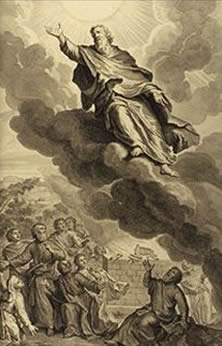
In the pages of Scripture lies one of the most remarkable stories in all of biblical history. A man named Enoch appears throughout both The Old Testament and The New Testament, yet his account defies the pattern of every other pre-Flood patriarch. While others end their life stories with “and he died,” Enoch's narrative reads differently: “Enoch walked with God, and he was not, because God took him.”
The Apostle Paul elaborated on this extraordinary account, noting that “by faith, Enoch was taken from this life so that he didn't experience death. He couldn’t be found because God had taken him away. But before he was taken, he was commended as one who pleased God.” This mysterious figure holds a unique place in Scripture, and understanding who Enoch was reveals why he stands as such a powerful connection between the two Testaments.
The Mystery of Enoch’s Books
What makes Enoch’s story even more intriguing is that he allegedly authored numerous texts as a result of his encounters with God. Yet despite this testimony from Scripture itself, many biblical scholars have rejected the idea that Enoch actually wrote the books bearing his name. Instead, they labeled these works pseudepigrapha, attributing them to later writers who supposedly borrowed Enoch’s name to gain credibility.
This dismissal persisted even after pioneering scholars like James Bruce and Richard Laurence examined these texts carefully. Most academics insisted that The First Book of Enoch couldn't have existed during the New Testament period, claiming it originated three centuries after Christianity’s birth.
Then came 1947 and The Dead Sea Scrolls.
When archaeologists discovered those fragmented documents in the Judean Desert near Qumran, everything changed. Among the seven hundred documents found, scholars were astounded to uncover ten manuscripts of The First Book of Enoch, along with related texts like The Book of Jubilees and The Testaments of the Twelve Patriarchs. Carbon-14 dating placed these manuscripts at approximately 200 B.C. or earlier.
No longer could anyone argue that these documents post-dated Christianity or lacked influence on those who knew Jesus directly.
A Biblical Figure No Longer Hidden
The Dead Sea Scrolls discovery democratized access to these texts. Before that find, knowledge of Enoch’s writings remained confined to academic circles. Now, ordinary readers could examine these ancient documents alongside the canonical Gospels and draw their own conclusions.
When readers compare the two, something remarkable emerges. Rather than supporting the theory that later writers fabricated these texts, the evidence points in the opposite direction. The First Book of Enoch contains parallels to the teachings of Jesus that are simply too precise and too numerous to dismiss as coincidence.
Scholars have identified at least one hundred direct references in The New Testament that trace back to the books attributed to Enoch. This isn’t a matter of scattered similarities; this is systematic connection. In short, this singular biblical figure serves as a veritable bridge between worlds, connecting Old Testament prophecy with New Testament fulfillment.
Parallels of Thought and Teaching
Consider the Gospel accounts of Jesus discussing the resurrection. In Matthew and Luke, when Jesus speaks of how resurrected people will refrain from marriage because they will be like the angels of Heaven, He was quoting from First Enoch.
Enoch wrote: “From the beginning you were made spiritual, living a life that is eternal; therefore, I haven’t made wives for you because your dwelling place is in Heaven.”
Jesus echoed this in His teaching on the resurrection. The parallel is unmistakable.
Similarly, when John records Jesus speaking of “rooms” in Heaven, few realize that Enoch had already described the “habitations of the elect.” Enoch told his children: “In the great time to come, there are innumerable mansions prepared for men, good ones for the good, and bad ones for the bad.” Later, Paul would reference this same concept when writing about eternal dwellings not built by human hands.
One of Jesus’ most distinctive titles, used eighty-one times in the Gospels, also originates in Enoch’s writings. The “Son of Man” appears repeatedly in Enoch’s prophecies:
“The kings, princes, and all who possess the Earth will glorify the Son of Man, Who was concealed from the beginning, in complete secrecy, by the power of the Most High and revealed only to the elect.”
When Mark records Jesus saying, “At that time, humanity will see the Son of Man coming in clouds with great power and glory,” he is drawing directly from this Enochic tradition.
The Elect One: A Hidden Title Revealed
Another remarkable connection involves how the disciples understood Jesus’ identity at His transfiguration. All four Gospel writers recorded the voice from Heaven, but Luke provides a subtle distinction that most Bible translations miss.
The Greek text reveals that the voice said: “This is My Son, My Chosen One: Listen to Him.”
This mirrors Isaiah’s prophecy about “My Chosen” or “My Elect One.” The title of the “Elect One” appears fifteen times throughout The First Book of Enoch. Enoch prophesied:
“In that day, the Elect One will sit upon a throne of glory, and their spirits within them shall be strengthened when they look upon My Elect One, because they’ve fled for protection to My holy and glorious name.”
The disciples, familiar with Enoch’s writings, would have recognized this title immediately. The voice declaring Jesus as the “Elect One” was announcing that He fulfilled the prophecies preserved in Enoch’s ancient texts.
Why This Connection Matters
These aren’t vague resemblances or forced interpretations. They’re precise linguistic and theological parallels that suggest intentional connection. How could such exact correspondence exist between texts attributed to an ancient patriarch and the teachings of Jesus unless both drew from the same divine source?
The question becomes impossible to avoid: Could texts with such clear connections to Jesus, Matthew, Mark, Luke, John, and Paul be forgeries or later fabrications? Would writers borrowing a famous name to gain authority include such careful theological alignment across centuries?
The evidence suggests otherwise. These books appear to have been recognized as genuine sources of truth by the greatest spiritual figures in history. The dismissal of these texts by modern scholars, whatever their scholarly credentials, can’t erase their connection to Scripture’s most important figures.
When Enoch walked and talked with God in ancient times, he received revelations about God’s kingdom and Christ’s coming. These revelations, preserved in the books bearing his name, resonated so deeply that the writers of The New Testament quoted them and Jesus Himself drew upon them. As such, Enoch stands unmistakably as a bridge between worlds.
Whether you approach these texts as someone seeking deeper spiritual understanding or simply as someone unwilling to accept institutional dismissals without examining the evidence yourself, Enoch’s story invites you to think beyond conventional boundaries. The connections between the worlds of The Old Testament and The New Testament become richer, clearer, and more compelling when you encounter them firsthand.
More to Explore
The recovery of lost or overlooked knowledge is exactly the kind of expedition that defines the work at The Lost Stories Channel. Its catalog of blogs, essays, books, audios, and videos approach these ancient mysteries with the care and curiosity they deserve. If you’ve ever felt that the full story of Scripture runs deeper than what you were taught, you’re right. The ancient texts that were set aside didn’t disappear. They waited. And for those willing to look, the trail back to them is still open.