Lost Stories Gem #40
What Do the Apocryphal Gospels Tell Us About Jesus
The apocryphal Gospels are a diverse collection of ancient texts that expand and elaborate on the teachings and narratives of Jesus’ birth, life, ministry, death, resurrection, and post-resurrection appearances as found in the canonical Gospels. While scholars and skeptics alike point to various reasons why these texts shouldn’t be taken seriously, they contain intriguing aspects that compel careful readers to ask how supposedly non-canonical works can echo biblical truths in such an uncanny way. Even if these texts are forgeries, as many insist, they still exhibit an unmistakable ability to convey the truth of God’s control and faithfulness to His promises.
Among these ancient documents, The Gospel of Nicodemus, also known as The Acts of Pilate, stands out as particularly noteworthy. Dating to around the 4th century AD, this text details the trial of Jesus, His resurrection, and His descent into Hades in ways that the canonical Gospels either gloss over entirely or leave frustratingly vague. What emerges from studying this ancient account is nothing short of transformative for anyone seeking a more complete picture of Christ’s redemptive work.
The Problem with Incomplete Narratives
When we examine only the canonical Gospels, three pivotal moments in Jesus’ life remain shrouded in mystery or silence. These aren’t minor details but rather central truths that, when fully explored, ring out a message of hope and inspiration. Yet because The Gospel of Nicodemus has been marginalized, these crucial aspects of Christ’s victory have been largely silenced in churches and classrooms alike.
Imagine that: Subject matter never mentioned in churches today even though it appears right there in Scripture. Imagine scenarios that fail to bring home truths that could inspire hope because the texts revealing them have been set aside as unreliable or apocryphal.
Truth #1: Jesus Actually Answered Pilate’s Question
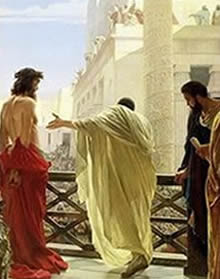
One of the most haunting moments in the canonical gospel record occurs when Pontius Pilate asked Jesus, “What is truth?” According to John’s account, Jesus supposedly never gave an answer to this vital question. The silence seems inexplicable. If God is no respecter of persons, as the Scriptures assure us, then wouldn’t the One Who came to “testify to the truth” have answered such an important question?
The Gospel of Nicodemus provides the answer we’ve been searching for. In this account, when Pilate asked his question, Jesus replied: “Truth is from Heaven.” A disappointed Pilate then responded: “So truth isn’t of this Earth, is that it?” But Jesus looked him squarely in the eye and said: “Don’t be too sure, my friend, because truth does exist on this Earth, but it does so among those who, having the power of judgment, are governed by the truth and who form proper judgment because of that truth.”
Now that sounds more like the Jesus we read about throughout Scripture: unflinching, uncompromising, unabashed. The answer is reasonable and profound, yet Pilate never took it to heart. By refusing to act on the truth he’d been given, Pilate perfectly illustrates Jesus’ own point: for those who refuse to act on truth, truth effectively doesn’t exist. Apparently, then, John seems to have condensed this exchange for his own theological purposes, while The Gospel of Nicodemus shows us the fuller conversation for anyone who is looking for a different perspective of this same event.
Truth #2: Others Rose From the Dead Along With Christ
The canonical Gospels contain only the slimmest of hints that others rose from the dead along with Jesus. Matthew mentions that “the tombs were opened, and many bodies of the saints who had fallen asleep were raised” (Matthew 27:52). Unfortunately, the account provides almost no detail about who these people were, what happened to them, or what their resurrection meant.
The Gospel of Nicodemus fills this gap with remarkable specificity. Two brothers named Charinus and Lenthius, the sons of Simeon the high priest, are among those who rise from their graves. What makes their testimony so powerful is that they don’t understand at first what has happened to them. They wander the countryside in a daze, refusing to speak to anyone.
When Charinus and Lenthius are finally brought before the Jewish authorities, they testify in writing about their experience:
They describe being in Hades, imprisoned in the shadow of death
They witness the approach of a brilliant, purple light as Jesus begins His descent
They see the great patriarchs and prophets of old rejoicing at His coming
They experience the shock of Satan and Beelzebub realizing their domain is about to be breached
In this most unexpected way, then, the testimony of these risen saints transforms our understanding of Christ’s resurrection, from a solitary event into a cosmic liberation. Jesus didn’t rise alone. His victory shattered the bonds of death itself, releasing all those who had waited in faith since the beginning of time.
Truth #3: Jesus Preached to the Departed Saints
Scripture tells us that after His crucifixion, Jesus “made proclamation to the spirits in prison” (First Peter 3:19). However, what that proclamation entailed remains a mystery in the canonical texts. The Gospel of Nicodemus, on the other hand, doesn’t leave this to guesswork. Instead, it provides an extended and explicit account of what scholars call the Harrowing of Hell—Jesus’ descent into the underworld and His confrontation with Satan and the prince of Hades, Beelzebub.
In this account, Jesus does far more than simply announce His victory. He also:
Directly confronts Satan and Beelzebub, exposing their inability to hold Him in death
Breaks the chains that bind the departed spirits of the saints
Takes Adam by the hand and begins leading all the righteous dead out of their captivity
Establishes His cross as the eternal standard of salvation
The impact of reading this fuller account can’t be overstated. It transforms events surrounding Christ’s resurrection from a theological abstraction into a vivid, astonishing drama in which Jesus personally rescues those who have belonged to Him since the foundation of the world.
Why This Matters for Modern Believers
While it’s true that The Gospel of Nicodemus has been marginalized by modern scholarship because it wasn’t included in the Canon, it’s also true that dismissing it entirely means accepting a severely truncated version of Christ’s redemptive work. But a spiritually curious reader—one who feels that mainstream teaching has left important questions unanswered—can’t help but notice what this apocryphal Gospel provides: completion, clarity, and a coherence that speaks to the deepest longings of the human heart.
Texts like this remind us that God’s promises aren’t shadowy or incomplete. When God makes a covenant, He doesn’t partially fulfill it; He thoroughly fulfills it, right down to the very last detail. When Jesus conquered death, He didn’t do so quietly or surreptitiously. He boldly descended into the very stronghold of death itself and liberated those who had been waiting for Him across the ages.
The parabiblical Gospels invite us to ask whether our interpretation of Scripture has been shaped by what we exclude as much as by what we include. They call us to recognize that truth, as Jesus Himself taught Pilate, belongs to those who not only have the courage to seek it but also the integrity to act upon it once they find it.
More to Explore
If you’ve ever felt that something crucial was missing from the Gospels as they’re typically taught, then you’re not alone. The Lost Stories Channel exists to shed new light on stories of old by exploring the intersection of faith, history, and the texts that have shaped our understanding of Jesus and His promises. Browse our full catalog of blogs, essays, books, audios, and videos, and you can begin your journey into these deeper truths today.