Soldiers, Executioners, and the Police
Questions Concerning the Biblical Mandate to Not Kill
ABSTRACT: One of the most familiar biblical mandates of all time is contained in the sixth commandment, which states: “You Should Not Kill.” On the surface, this decree seems to condemn anyone involved in the taking of human life, such as soldiers, executioners, or police. In every case, there’s a tendency to enlist God and His word in the holy crusade of anyone citing this prohibition against the killing of humans. The only problem: The God of the Paradox isn’t that easily corralled into such one-dimensional thinking. And this is where The Bible becomes a quagmire of apparent contradictions, leading to centuries of confusion on the part of a disbelieving world who, without even knowing it, are themselves victims of the most unnecessary form of disinformation in the history of Scripture. Because unlike so many biblical misconceptions, which demand extensive review of their proper context to disarm them, this misconception requires very little…
THERE’S CERTAINLY no more effective ingredient in a great misconception of The Bible than the human tendency to ignore the paradoxical nature of Scripture.
For instance, the truth contained in the Sermon on the Mount has the potential to offer a tremendous boon to anyone who confronts it. But ironically, if we really pay attention to what Jesus said, we’d realize He disqualified His entire audience when He employed His famous sayings: “You’ve heard it said … but now I say…” By failing to grasp the paradoxical quality of Scripture, the tendency is to presume its lessons can be performed by anyone, instead of seeing its real purpose, which was to forever shatter the illusion that we can obey God’s word in our own strength.
This kind of confusion is never more evident than when we examine the implications of the sixth commandment, which is itself quite telling because the number six has a great deal of spiritual significance when it comes to its subject matter. On the sixth day, God created Adam from the dust of the ground, and as such, it’s fitting that the sixth commandment is: “You Should Not Kill.” (Exodus 20:13; Deuteronomy 5:17)
Story Continues Below
Soldiers, Executioners, and the Police: Questions Concerning the Biblical Mandate to Not Kill
“A profound journey of understanding… This reinterpretation is massive… Lightening the heavy load of guilt carried by many…”
To hear Price’s essay review of Soldiers, Executioners, and the Police, CLICK HERE.

Story Continues From Above
This, of course, is usually considered a prohibition against any form of killing humans, and because of this, we see this verse invoked in other areas of life that frankly do more to confuse the truth of The Bible than to clarify it. This happens when society applies this prohibition so zealously that if we didn’t know better we’d think those expressing such a view were themselves believers of Scripture as opposed to their citing this commandment simply to win their argument.
This, if you’ll notice, is never more evident than in the way the media, whether in fiction or nonfiction, uses this verse as a dramatic device. In short, when it comes to matters of life and death, pointing to this commandment makes for great drama. When it comes to the ultimate crisis of the taking of a human life, this ancient prohibition is always the first element that finds its way into the scenario.
In times of war, this verse is used to condemn anyone who’d be so bold as to answer the call of duty. In the fight against crime, this verse is used to call into question the motives of anyone who’d defend the safety of others. It’s also used to inflict all manner of guilt and shame on the part of anyone who’s ever been driven to the point of suicide or euthanasia. In every case, there’s a tendency to enlist God and His word in the holy crusade of anyone citing this prohibition against the killing of humans.
The only problem: The God of the Paradox isn’t that easily corralled into such one-dimensional thinking. And this is where The Bible becomes a quagmire of apparent contradictions, leading to centuries of confusion on the part of a disbelieving world who, without even knowing it, are themselves victims of the most unnecessary form of disinformation in the history of Scripture. Because unlike so many biblical misconceptions, which demand extensive review of their proper context to disarm them, this misconception requires very little.
Story Continues Below
To hear Kent and Zen Garcia talk about correcting biblical misconceptions, from September 9th, 2021, CLICK BELOW.
Story Continues From Above
OUR FIRST ORDER of business is to take a closer look at the word used in this verse: “You should not kill.” In the original Hebrew, the word translated as “kill” is ratsach, which can just as easily be understood as “murder.” This is made clear in virtually all of our modern translations of The Bible, which now read: “You should not murder.” Such was not the case, however, for more than four hundred years, during the time when The King James Bible dominated the Western world, from the time of its publication in 1611.
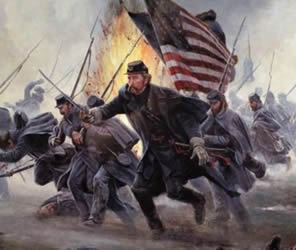
Just think: From the earliest days of Colonial America, we’ve consistently viewed this biblical injunction, in its strictest sense, as prohibiting any form of killing humans. Yet as a nation, which was born in revolution, which enforced capital punishment for offenses involving the death of others, and which, in its westward expansion, fought numerous wars, has also been haunted by a moral dilemma that’s hung over the national conscience like a dark cloud.
But only in the English translations of the early twentieth century did biblical translators begin to dig deeper into the contextual setting of Scripture, prompting them to translate the word in the sixth commandment, and others that referred to it, as “murder” rather than “kill.” Only then did the debate over what The Bible seemed to be telling us, in saying we should never kill, finally enter new territory. Only then did people who felt beholden to their beloved version of Scripture—in this case, The King James Bible—finally realize there might be another way to view this age-old concern.
Story Continues Below
Soldiers, Executioners, and the Police: Questions Concerning the Biblical Mandate to Not Kill
“A real shift… Cuts through simple guilt traps… An invitation to think deeper…”
To hear Academia’s essay chat about Soldiers, Executioners, and the Police, CLICK HERE.
Story Continues From Above
And it’s not as though anyone couldn’t make the leap of understanding toward the real meaning of what The Bible had been saying all along. Even when faced with the King James translation as the only source on the matter, clearer heads could always discern the truth, considering how this word “kill” was often used in the context of manslaughter or self-defense, as opposed to premeditated murder.
Of course this is even more critical in Hebrew than it is in English, because the limited number of Hebrew words demands that they contain a wider variety of meaning and thus require a greater awareness of their context to determine their meaning. That’s why translating the Hebrew word ratsach as “murder” isn’t always so cut-and-dry.
This brings up an interesting question: If The King James Bible translators could discern a more accurate meaning of the word ratsach from its context in other areas, when it referred to accidental deaths, why did they translate the sixth commandment as a prohibition against all forms of killing? It’s not as though they weren’t aware of God’s ordering of other kinds of killing throughout the rest of Scripture.
God destroyed an entire world overrun by the wicked with the Great Flood. Moses and Joshua orchestrated the killing of some three thousand people who’d been worshipping the Golden Calf. The Israelites eradicated the population of seven nations who’d occupied Canaan before they took possession of the land. Not to mention an array of biblical mandates for the killing of lawbreakers of various kinds.