Prophecy, Déjà Vu, and the Dream State (Cont’d)
Questions Concerning the Discernment of Future Events (Cont’d)
TO BEGIN WITH, consider one of the most overlooked aspects of the subject of biblical prophecy. I’d like to know: How many of you reading this were aware that some one-third of all the prophecies in The Bible originated as a dream—or as is sometimes the case, a vision, which is just another way of saying a waking dream? Said God:
Listen to what I say: “If there’s a prophet among you, I’ll make Myself known to him in a vision. I’ll speak to him in a dream…”
Not only are numerous prophecies conveyed through dreams, but the most pivotal prophecies in biblical history have occurred as dreams, which should certainly drive home the point that when the future collides with the present in the human dream state, it’s no accident in the plan of God.
For example, when God told Abraham in a vision that his descendants would be like the stars of Heaven, and that they’d inherit the land of Canaan, Abraham asked God how he’d know that it would happen. It was then that the Scriptures describe a strange and mysterious occurrence. God didn’t just lay out the future for Abraham in another vision. In this case, The Bible tells us:
As the Sun began to set, a deep sleep fell upon Abraham, in which a dreadful darkness overcame him, and God said to him, “Know this for sure: Your descendants will be strangers in a land that isn’t their own, and there they’ll be enslaved and mistreated for four hundred years. But I’ll judge the nation they serve as slaves, and when they come out, they’ll be even richer than when they went in…”
Later on in Genesis, we read that Abraham’s grandson, Jacob, had managed to trick his twin brother Esau out of their father’s blessing. Outraged, Esau vowed to avenge his brother’s treachery by killing him, so Jacob fled in fear of Esau’s reprisal. It was sometime during his trip to Haran that Jacob lay his troubled head down to sleep. It was then that he had his famous dream, in which he saw a ladder reaching up to Heaven—a ladder that the angels of God were ascending and descending. And above it all was the Lord, Who said:
“I am the Lord, the God of your fathers, Abraham and Isaac. I’ll give this land you’re lying upon to you and your descendants, who’ll become like the dust of the Earth… The whole world will be blessed through you and your offspring, and I’ll be with you and watch over you wherever you go. I’ll bring you back to this land, and won’t leave you until I’ve done what I’ve promised you.” And when Jacob woke up, he trembled and said, “The Lord was here—right on this very spot—but I had no idea. What an amazing place this is. It’s none other than the house of God, and here is the gate of Heaven itself!…”
Story Continues Below
Prophecy, Déjà Vu, and the Dream State: Questions Concerning the Discernment of Future Events
“Goes down some intriguing rabbit holes… A big deal, with big ideas… Compelling, refreshing, a cool take…”
To hear Academia’s essay chat about Prophecy, Déjà Vu, and the Dream State, CLICK HERE.

Story Continues From Above
After Jacob, there was his son, Joseph, who not only had prophetic dreams of his own but also was well known for his ability to interpret the dreams of others. (Genesis 37; 40; 41) And finally, one of the greatest examples of the power of dreams occurred in the life of the prophet Daniel who, like Joseph before him, was not only a prolific dreamer but could also interpret other people’s dreams, which, in turn, enabled him to attain a position of great power in Babylon. In what is undoubtedly the most pivotal prophecy in Old Testament times, Daniel had the entire prophetic timeline of God’s chosen people shown to him in a waking dream. (Daniel 2; 4; 5; 7-12)
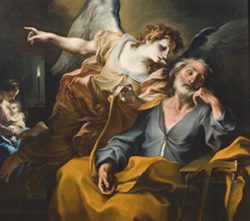
Not the only Joseph in The Bible to have had dreams, the father of Jesus almost rejected Mary, his betrothed, when it was discovered that she’d become pregnant prior to their getting married. But before he could, God told him in a dream that she’d been chosen to bear the Christ Child. (Matthew 1:20)
This, then, set off a chain reaction of dreams and visions throughout New Testament times. The priest Zacharias learned of the birth of his son John the Baptist. (Luke 1:5-25) Ananias was told to visit one Saul of Tarsus, to whom he was sent to restore his sight. (Acts 9:10-18) The Apostle Peter learned that the new movement begun by Jesus wasn’t going to be limited to the Jews alone but would include the Gentiles as well. (Acts 10:9-16) And Paul had several things revealed to him in a number of visions, all designed to impart unique insights to him. (Acts 16:9-10; 18:9-11; Second Corinthians 12:1-6)
Particularly noteworthy is that Christians or Israelites weren’t the only ones who experienced these extraordinary communications. Pontius Pilate’s wife had a dream that convinced her of Jesus’ innocence, (Matthew 27:19) while Cornelius, a Roman centurion, was told in a vision that Peter had a special message meant especially for him. (Acts 10:1-8)
Then, as if to punctuate the importance of this medium of communication between God and humanity, The Bible concludes with the most spectacular case of a message by waking dream in all of Scripture. As it is written:
I, John, your brother and companion … was on the Isle of Patmos because of the word of God and the testimony of Jesus. And on the Lord’s Day, I was in the Spirit, when suddenly I heard behind me a voice like a trumpet, which said, “Write down what you’re about to see, and send it to the seven churches of Asia…”
Having arrived at this point, then, what I’m about to say shouldn’t sound so outrageous or improbable, because what connects the phenomenon of prophecy and déjà vu, leads us directly to something we all do. If we’re human, then we all do this, whether we’ve ever experienced déjà vu or not. And because we all do this, it means that we’re all, in a very real sense, infused with the gift of prophecy, though most would agree not to the same degree as the biblical prophets.
So, what is it we all do that connects biblical prophecy and human prophecy, as I’ve dubbed it?
Why, the answer, of course, is … dream.
Are you human? Then you dream. And if you dream, then you, too, are a likely candidate to experience déjà vu, whether you have the slightest inkling that it’s the window of your dreams that provides you the avenue to experience déjà vu in your life.
And all you have to do to prove me right or wrong is consider one thing the next time you experience the sensation of déjà vu. The moment the feeling overtakes you, search your mind and ask yourself: Am I really experiencing something that I’ve done in a past life, as some philosophies insist explains the feeling of déjà vu? Or, instead, could it be I’m experiencing in the present what I’ve previously dreamt of in my past? If you do that, and, I might add, if you do that with the awareness that this is one of the primary ways that God communicates with humanity, then I believe you’ll be one step closer to understanding the true purpose of prophecy in The Bible. In other words, when it comes to how most of humanity views the role of prophecy, you’ll be one step closer to unmasking one of the gravest deceptions ever perpetrated in the almighty name of scriptural interpretation. That deception is the assumption that just because the future isn’t as obscure as we’ve been led to believe we can therefore predict the future. What do I mean by that?
Story Continues Below
To hear Kent and Zen Garcia talk about correcting biblical misconceptions, from September 9th, 2021, CLICK BELOW.
Story Continues From Above
WELL, NEXT ASK YOURSELF: How many times have those claiming to know when a prophetic event would occur been wrong, especially when comes to prophecies of the Second Coming of Christ?
The answer, of course: They’ve always been wrong!
If that’s true, then we’re left with just two conclusions: One, biblical prophecy itself is unfounded and therefore should be discarded. Or two, something is wrong with our equation in determining the fulfillment of prophecy. Personally, I lean toward the latter conclusion, and I do so for one reason.
I’m convinced that anyone who predicts a date for the fulfillment of any prophecy in The Bible is bound to be wrong because God is personally responsible for confusing the issue. Can I say that again for those of you who might think I’ve misspoken? The reason people repeatedly get their prophetic timetables so fouled up, and produce so many incorrect predictions, is because this is how God has designed biblical prophecy. To confirm this, just consider the two most important prophetic timelines in Scripture.
When God revealed the timing of Abraham’s descendants becoming like the stars of Heaven, Abraham was told they’d be strangers in a strange land for four hundred years, but then afterward they’d leave richer than when they entered. (Genesis 15:13-14) And when God revealed the timing of the Coming of Messiah, Daniel was told it would occur four hundred and eighty-three years after the going forth of the commandment to rebuild the Temple of God. (Daniel 9:25) Accordingly, the event that would mark the completion of Abraham’s timeline would be the first Passover Feast, which would open the door for the Exodus of Israel out of Egypt. The event that would mark the completion of Daniel’s timeline would be the death of Messiah as a sin offering, which would open the door for the release of the human race from the bondage of sin. Seen together, these two events—though scattered through time—represent prophetic bookends in God’s messianic timeline of the ages.
What we have, then, is Moses, as an earthly high priest, sacrificing the first Passover lamb, as a type of Christ, which sets the stage for Jesus, as our heavenly High Priest, sacrificing Himself as the substance of that Passover lamb. And considering that these intertwined events represent the crux of redemptive history, it’s no wonder they were prophesied in very specific historical terms.
What’s more, it’s because of the historical nature of these prophecies that mankind became imbued from that point onward with the belief that biblical prophecies were provided to predict the future—again, down to the very year and day of their fulfillment.
That said, you might ask: “Then how come you’re saying that believing prophecy predicts the future is another misconception of The Bible?”
“I say that because contained in these prophecies is a proverbial ‘catch,’ as it were.”
And by that I mean, as specific as these chronological clues are, which is to say, in the four hundred year, and four hundred and eighty-three year timelines, respectively, both timelines have starting points that are mired in historical uncertainty.
Concerning Abraham’s timeline, it was said to begin when the Israelites became slaves in Egypt, which didn’t occur at a particular moment in time but was something that only gradually took hold in the years after the Egyptians usurped the power of the Israelites. Likewise, concerning Daniel’s timeline, biblical historians point to no less than three possible dates that qualify for when the commandment went forth to rebuild the Temple at Jerusalem.
In both cases, then, the prophecies that provide us with a clear-cut way to predict their fulfillment both contain built-in ambiguities.
So, naturally, the question arises, in light of such a curious fact: Why would the Author of these prophecies, namely God, give them to us knowing perfectly well they contain such ambiguities?
First, consider God’s purpose in giving us these prophecies:
The former things I declared of old. They went out of My mouth, and I announced them. Then suddenly I did them, and they happened. Because I know how stubborn you are, with necks as unbending as iron, and heads as hard as bronze, I told you ahead of time what I was going to do. That way you’d never be able to say, “My idols did it. My wooden image and metal god commanded it to happen!” You’ve heard My predictions and seen them fulfilled, but you refused to admit it. Now I’ll tell you new things that I’ve never mentioned before, secrets that you’ve not yet heard…
Story Continues Below
Prophecy, Déjà Vu, and the Dream State: Questions Concerning the Discernment of Future Events
“Intriguing… Shakes up how we think about not just prophecy but human consciousness itself… Broadens the scope of our understanding…”
To hear Price’s essay review of Prophecy, Déjà Vu, and the Dream State, CLICK HERE.
Story Continues From Above
Based on the preceding passage, then, two conclusions become apparent: To demonstrate God’s omnipotence, He’s inspired His prophets to prophesy—albeit in veiled form—about future events. But, because God knows how stubborn humanity is, He’s also prevented us from abusing the knowledge of these time-specific prophecies by building ambiguities into them to act as prophetic “speed bumps,” as it were. It’s these “speed bumps,” as I like to call them, that hinder us from just sitting back, watching the ticking clock, and knowing precisely when these future events will occur. Thus, by God’s masterful design, these built-in ambiguities serve to both undermine human presumption and demand faith on the part of the recipients.
SO, IF ON ONE HAND, God tells us what’s going to happen before it happens so we’ll recognize He’s predicting it, but on the other hand, He thwarts our desire to predict the future by way of these prophetic “speed bumps,” why concern ourselves with prophecy at all?
Because despite the difficulties involved in understanding biblical prophecy, God’s purpose in providing them remains clear. Prophecies are given to provide us with hope in the face of hopelessness—especially those concerning the Advent of Christ. That’s why when speaking of the prophecies of The Bible, we’d do just as well to speak of the promises of God, because that’s what really lies at the heart of every prophecy uttered since the dawn of time.
From age to age, God’s promises have elevated humanity from the darkest despair of those earliest days when our first parents were exiled from Paradise. Subsequent to that tragic event, the human race has struggled with grasping at the promises of God as they were then revealed throughout the history of redemption through the various messianic figures—from Enoch to Noah, from Abraham to Moses, from David to Christ. Since then, every generation has been confronted by their own promises from God, and although those promises are unique to each generation, the one constant throughout time is that God isn’t just the Lord of nations. He’s also the Lord of each and every person—the Lord of you and the Lord of me. And by that I mean, God’s intention, with every prophecy He’s ever revealed, is, they’re designed to bring to a point of completion not only human history but also every human being who’s ever encountered them.
That’s what makes biblical prophecy unique among all prophetic traditions, so that the true significance of placing our hope in God’s promises isn’t that they’ll be fulfilled at some point in the future, but that, in the simple act of embracing those promises, we’re fulfilling ourselves, here and now. In this way, as humans who simultaneously inhabit two worlds—that of Earth, as touching our flesh, and of Heaven, as touching our spirit—we’re already partaking in all that God’s promises hold out to us.
So, when the prophets of old spoke of that day when the Son of Man would boldly intrude into history and make right all our wrongs, it’s true we can rest assured that those future events will take place because there’ve been so many other prophecies that have been fulfilled up to this point.
But more important than all that, we’re not simply assured by these facts about the future because of what we know about the past. By the power of faith in God’s promises, we’re also, in a very real sense, already connected with that future, just as any of us who’ve experienced déjà vu already know the future isn’t as far away as it seems. And in that moment, we know as no one else could possibly know: The fulfillment of all that God has promised is no longer dependent upon some future date in history, because, for us, the future has already arrived.