Lost Gem #21
How Faith and Science Flow From the Same Wellspring
Above the entrance to the Daubeny Building at Oxford's Botanical Garden stand words that might surprise you: "Without experiment nothing can be properly known." These words, inscribed in stone, come from a book published in 1266. And the author wasn't a modern scientist but a Franciscan friar named Roger Bacon.
This forgotten chapter of history sits at the heart of one of the greatest misconceptions about faith and knowledge. Theology and science are widely believed to be natural enemies, locked in perpetual conflict. Yet the historical record tells a different story. When both sides cling to this narrative of inevitable conflict, they ignore evidence that contradicts their very foundations.
The problem runs deep. Theologians often dismiss scientific inquiry as godlessness while scientists typically dismiss theological thinking as naive superstition. Both sides have constructed what's known as a "straw man" fallacy, attacking distorted versions of their opponent's position rather than engaging with what they really believe.
How Both Camps Argue the Same Point
Walk past the rhetoric, and something remarkable emerges: theology and science operate in nearly identical ways. Both require belief in things that we can't directly touch, see, or hear.
The theologian believes in the God of Creation through faith and reason. The scientist believes in the Big Bang through evidence and inference. Neither can directly prove their foundational claim, yet both hold their convictions with equal certainty. Both professions demand rigorous thought and investigation. Both pursue a precise understanding of ultimate reality.
Yet each side condemns the other for relying on such vague notions as mere "belief." The irony is lost on them. If theology and science truly operate on the same epistemological foundation, how sensible is it for one to attack the other for what it fundamentally believes?
This mutual blindness has allowed the "straw man" fallacy to persist unchecked, kept alive in ignorance and suspicion rather than honest historical examination.
The Real History of Scientific Thought
The word "science" has shifted meaning across centuries. From classical antiquity through the eighteenth century, science meant "natural philosophy," encompassing astronomy, geography, and medicine. It was the nineteenth century that gave us "the Scientific Method," creating the distinction we know today.
This matters, because before the Scientific Revolution, theology and natural philosophy were inseparable. And more importantly, the men who built that revolution weren't secular rebels but thoughtful believers. As Roger Bacon, the 13th-century Franciscan friar who demanded experimental verification, wrote:
"Having laid down the fundamental principles of wisdom... I now wish to unfold the principles of experimental science, since there are two ways of acquiring knowledge, one through reason, the other by experiment. Argument reaches a conclusion and compels us to admit it, but neither makes us certain nor so annihilates doubt... unless it finds assurance by way of experience."
What's more, Bacon was no outlier. Just consider the many hallowed figures who followed him:
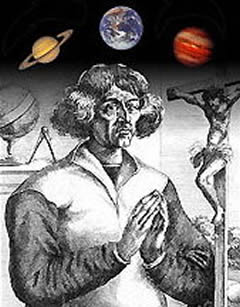
Nicolaus Copernicus (1473-1543), astronomer and canon of the Catholic Church, he challenged geocentrism with heliocentrism
Michael Servetus (1509-1553), theologian and physician, he provided the most accurate pre-Harveyan description of blood circulation
Francis Bacon (1561-1626), philosopher and statesman, dubbed the father of the Scientific Method by Voltaire, he unified observation and inductive reasoning
Johannes Kepler (1571-1630), astronomer and natural philospher, his three laws of planetary motion transformed astronomy, demonstrating that planets travel in elliptical orbits
Galileo Galilei (1564-1642), astronomer and mathemetician, the father of modern physics, his work laid the foundations of modern science while his advocacy of heliocentrism led to his house arrest
Blaise Pascal (1623-1662), theologian, he advanced mathematics and physics
Robert Boyle (1627-1691), natural philosopher and physicist, he founded modern chemistry, opening the door to atomic understanding
John Ray (1627-1705), theologian and naturalist, he fathered natural history
Isaac Newton (1643-1727), physicist and astronomer, he was a key figure in the Scientific Revolution, formulating the laws of motion and universal gravitation
Carl Linnaeus (1707-1778), botanist, his faith informed his systematic classification of life
William Herschel (1738-1822), astronomer, he pioneered modern telescopic astronomy
Georges Cuvier (1769-1832), naturalist and zoologist, he is considered the father of paleontology because of his work that expanded biology and established extinction as a fact
Humphrey Davy (1778-1829), chemist and inventor, he was a pioneer in electrochemistry, renowned for revolutionizing our understanding of chemical elements
Michael Faraday (1791-1867), chemist and physicist, he revolutionized our understanding of light, electricity, and electromagnetism
The nineteenth century only deepened this pattern. Joseph Lister, Louis Pasteur, James Clerk Maxwell, Lord Kelvin, Matthew Maury, and Gregor Mendel were all scientists whose breakthroughs were matched only by their devotion to Scripture.
Why History Got Rewritten
Tragically, though, somewhere along the way, this history was buried. In its place, modern culture constructed a false narrative: that science and faith have always been naturally at odds with one another and for progress to occur we must choose one and reject the other. Sadly, this narrative serves no one but those who have the most to benefit from this supposed conflict.
If science and theology appear to be enemies, then believers will never trust any form of scientific inquiry, and scientists will, in turn, be more apt to dismiss any and all forms of theological insight. As a result, the institutions remain separated, weakened, and less capable of challenging one another constructively.
But the historical truth remains. The Scientific Method wasn't born from a rejection of theology. It emerged from minds that honored both reason and revelation, observation and Scripture. These pioneers saw no contradiction between investigating God's creation and worshiping God as the Creator.
What Unites These Pursuits
At their deepest level, both theology and science rest on the same foundation: sacrifice of ego for the sake of truth. Theology demands death to self for spiritual renewal. Science demands death to the ego for objective discovery. Both pursue understanding beyond themselves.
When a theologian studies Scripture with humility, willing to be wrong, and when a scientist tests a hypothesis prepared to abandon it, they follow the same spiritual path. Both disciplines call practitioners to subordinate personal preference to reality as it actually is.
The conflict between them isn't inherent. It's constructed. And constructed things can be deconstructed.
A Better Way Forward
What would happen if we stopped rehearsing the tired narrative of conflict and began asking honest questions about what these institutions actually share?
We might discover that faith in God's orderliness of the Universe and confidence in repeatable, observable patterns aren't opposing worldviews but complementary ones. We might recognize that asking "how does it work" and "why does it exist" aren't rival inquiries but partners in understanding.
The Lost Stories Channel exists because both questions matter. History, philosophy, theology, and science aren't separate channels but threads in a single tapestry. When perspective is divorced from evidence, or evidence from meaning, understanding remains incomplete.
The men and women who built modern science understood this. They didn't see their investigations as a betrayal of faith or their faith as a hindrance to discovery. For them, the pursuit of truth in any form was worship.
That integration is worth recovering. Not through false compromise or shallow agreement, but through honest engagement with how these disciplines actually developed and what their greatest practitioners actually believed. The historical record is clear: theology and science reach their conclusions together. It's time, then, to begin our journey toward a better way forward.